This week we investigated computational thinking and gaming in education.
Computational Thinking
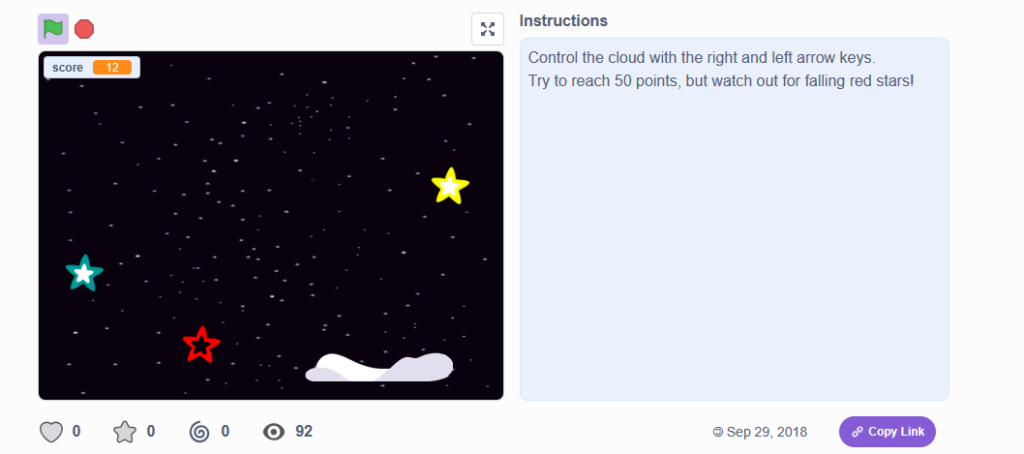
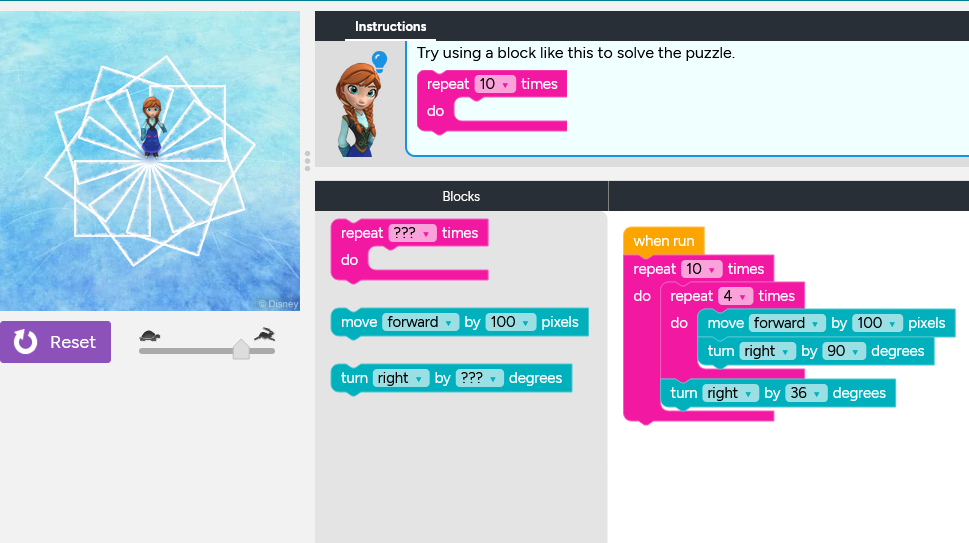
As part of this class we played some games using the Scratch software. These games ranged from Star Catcher, Artillery and Anna and Elsa Ice Skating. Of all these games I found Anna and Elsa the most engaging. The game uses block coding as a mechanic to guide Anna or Elsa along a path.
This game is great for teaching coding but much more applicable skills of computational thinking. This way of thinking focuses on breaking down a problem (decomposition), looking for similarities to other problems (patterns), identifying key information (abstraction) and creating a step-by-step(algorithm).
I teach social studies and this way of thinking can be useful for examining sources, deducing trends in a past era and creating arguments. Like any skill, these require practice and low-stakes games like these can help teach these skills in an computational, fun way.

Games in Education
Games in education allow teachers and students to engage with material in novel and non-traditional ways. Students would gain an appreciation and possibly make connections that they might not otherwise do in a stand and deliver lecture-centric class.
One example of how one might include games in Social Studies might be roleplaying games like Secret Hitler, which emulates Weimar Germany and how fascism might take control of a nation in secret ways.
An important concern to note is that of time, as there might not. Another is how learning objectives will be accomplished by playing the game. Not every subject or topic might allow for a game. Some topics might be seen as trivialized by gamifying them, as such the teacher should use their best discretion when designing activities and games.